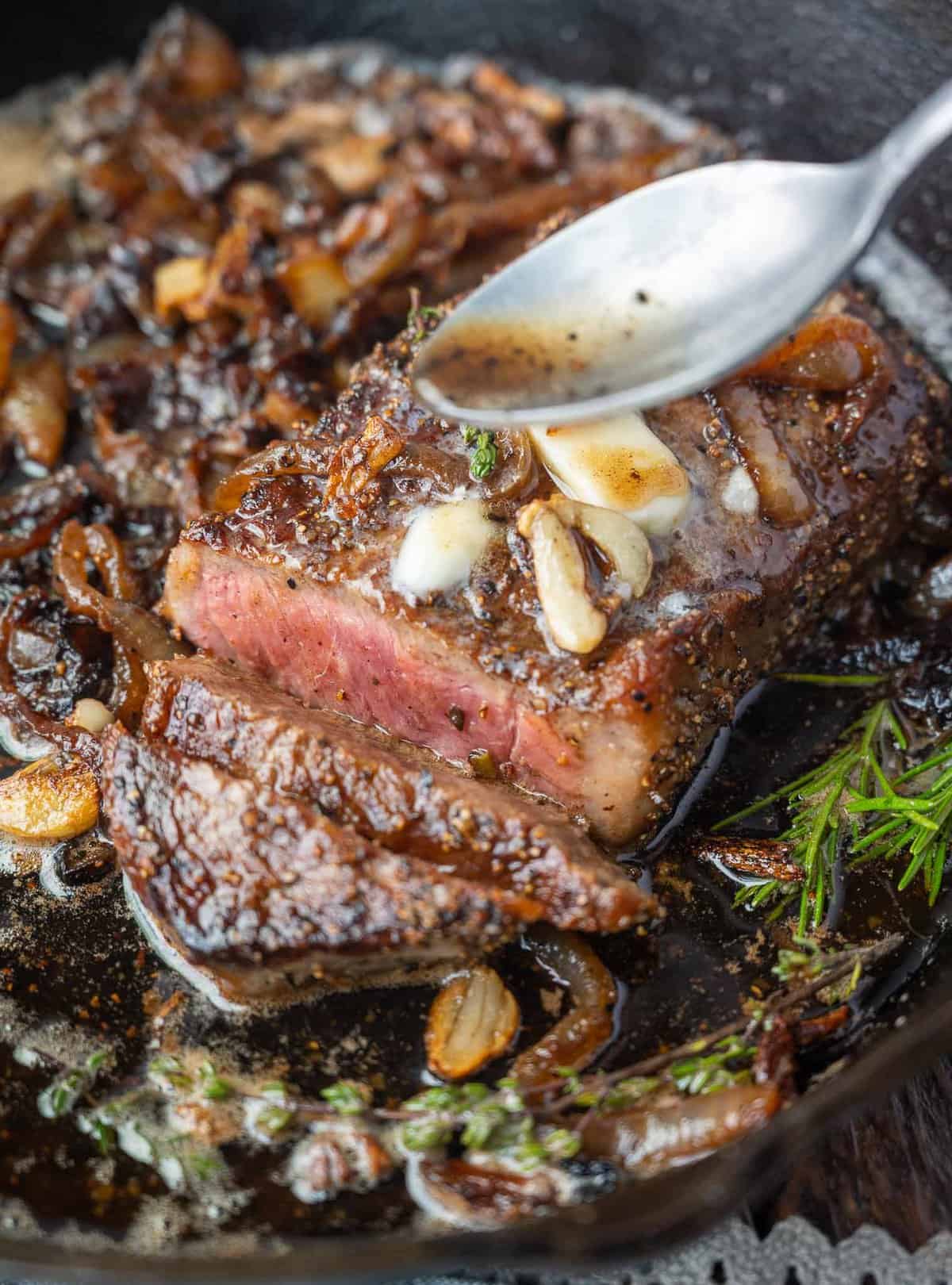
Unlocking Steakhouse Secrets: Your Guide to Pan-Seared Rib Eye with Garlic Butter Perfection
Imagine a steak so tender it practically melts in your mouth, enveloped in a rich, aromatic garlic butter sauce, all achieved in your own kitchen. This isn't just a dream – it's the reality of mastering the pan-seared
rib eye steak with garlic butter. Forget expensive restaurant bills; with a few simple techniques and quality ingredients, you can consistently create a show-stopping meal that rivals any fine dining experience.
The rib eye, celebrated for its exquisite marbling and robust flavor, is an ideal candidate for pan-searing. This method creates an irresistible, deeply browned crust while keeping the interior exquisitely juicy. When paired with a decadent garlic and herb-infused butter, you elevate an already fantastic cut of beef into an unforgettable culinary masterpiece. Whether you're a seasoned home cook or new to steak preparation, this comprehensive guide will equip you with everything you need to know to achieve pan-seared perfection every time.
Why Rib Eye Reigns Supreme for Pan-Searing
Choosing the right cut is the first step to an extraordinary steak. The rib eye, often considered the king of steaks, is an excellent choice for pan-searing due to its unique characteristics. It comes from the rib section of the cow, an area known for its generous marbling – those beautiful streaks of fat that weave through the muscle. This intramuscular fat is key to the rib eye's legendary flavor and melt-in-your-mouth tenderness. As the steak cooks, the marbling renders, basting the meat from within, ensuring a juicy, succulent result.
When selecting your rib eye, look for steaks that are 1 to 1.5 inches thick. This thickness allows for a beautiful sear on the exterior without overcooking the interior. You can opt for boneless or bone-in rib eye steaks; both are fantastic. A bone-in steak may take slightly longer to cook and offer an even richer flavor due to the bone marrow, while a boneless cut provides quicker, more even cooking and easier slicing. For a truly exceptional result, aim for steaks weighing between 10-12 ounces each, ensuring a substantial and satisfying portion.
Mastering the Pan-Sear: Step-by-Step for a Perfect Crust
Achieving that coveted, deep golden-brown crust, often referred to as the Maillard reaction, is the hallmark of a perfectly pan-seared steak. This chemical reaction creates hundreds of new flavor compounds, giving the steak its irresistible aroma and taste. Here’s how to nail it:
The Essential Preparation
1.
Bring to Room Temperature: Remove your rib eye steaks from the refrigerator about 20-30 minutes before cooking. Allowing them to come closer to room temperature promotes more even cooking throughout the steak, preventing a cold center and overcooked edges.
2.
Season Generously: Pat the steaks thoroughly dry with paper towels. Excess moisture is the enemy of a good sear, as it will steam the meat instead of browning it. Once dry, season both sides liberally with kosher salt and freshly ground black pepper. Don't be shy with the salt; a good amount helps tenderize the meat and enhances its natural flavors.
The Searing Process
1.
Heat Your Pan: The type of pan you use is crucial. A heavy-bottomed pan, such as an enamel cast iron skillet or a traditional cast iron skillet, is highly recommended. These pans retain heat exceptionally well, ensuring a consistent and even sear. Place your pan over high heat until it's smoking slightly. This indicates it’s hot enough.
2.
Add Oil: Pour 1 to 1.5 tablespoons of a neutral-flavored oil with a high smoke point into the hot pan. Excellent choices include safflower oil, canola oil, grapeseed oil, or peanut oil. Avoid olive oil here, as its lower smoke point means it will burn and impart bitter flavors before your steak is properly seared.
3.
Sear the Steaks: Carefully place the seasoned rib eye steaks into the screaming hot pan in a single layer. Do not overcrowd the pan, as this will drop the temperature and lead to steaming instead of searing. If necessary, cook in batches. Cook for 4-5 minutes per side, or until a deep golden-brown crust has formed. Resist the urge to move the steaks around; let them sit undisturbed to build that beautiful crust.
The Magic of Garlic Butter Basting
Once your steaks have developed that glorious sear, it's time to introduce the element that truly transforms this dish into a restaurant-quality experience: the garlic butter baste. This technique not only infuses incredible flavor but also helps to keep the steak incredibly moist and tender.
1.
Introduce the Aromatics: After searing both sides, reduce the heat to medium. Add 4 tablespoons of unsalted butter to the pan. Once the butter has melted and is gently bubbling, add 4 smashed garlic cloves and a few sprigs of fresh rosemary (or other herbs like thyme or sage). Stir to combine, allowing the butter to become fragrant.
2.
The Basting Technique: Tilt the pan slightly and, using a large spoon, begin to continuously spoon the aromatic garlic butter mixture over the top of the steaks. Continue basting for 2-3 minutes, allowing the flavors to permeate the meat. This process also helps to gently cook the steak to your desired internal temperature.
3.
Check for Doneness: This is where a reliable probe thermometer becomes your best friend. Insert the thermometer into the thickest part of one of the steaks, avoiding the bone if using bone-in cuts. For a medium-rare steak, aim for 125-130°F; for medium, target 130-135°F; and for medium-well, 135-140°F. Remember that the temperature will continue to rise slightly (carryover cooking) after you remove the steak from the pan.
Tips and Tricks for Steakhouse-Quality Results
Achieving the perfect
rib eye steak with garlic butter isn't just about following steps; it's about understanding the nuances. Here are some extra insights to elevate your game:
*
Invest in a Good Thermometer: A quality instant-read probe thermometer is non-negotiable for perfectly cooked steak. Guessing doneness often leads to overcooked or undercooked results.
*
Don't Forget to Rest: This is arguably one of the most crucial steps. Once your steaks reach their target temperature, remove them from the pan and place them on a cutting board or warm plate. Let them rest for at least 5 minutes, preferably 10. Resting allows the juices, which have been pushed to the center during cooking, to redistribute throughout the meat. Skipping this step means all that delicious juiciness will end up on your plate, not in your steak. Spoon any remaining pan drippings over the steaks as they rest for extra flavor.
*
Slice Against the Grain: For maximum tenderness, especially with cuts like rib eye, always slice against the grain. This shortens the muscle fibers, making each bite more tender and enjoyable.
*
Experiment with Herbs: While rosemary is a classic choice for garlic butter, don't hesitate to try other fresh herbs like thyme, sage, or even a bay leaf for subtle variations in flavor.
*
The Right Accompaniments: A perfectly cooked pan-seared rib eye demands equally delightful sides. Think creamy mashed potatoes, crisp roasted asparagus, a simple garden salad, or even a baked potato. For a truly elevated experience, consider a robust red wine like Cabernet Sauvignon or Merlot to complement the rich flavors of the steak.
For those looking for even more inspiration to craft the perfect steak dinner, be sure to check out our guides on
Restaurant-Quality Rib Eye: Easy Garlic Butter Steak Recipe and
Simple Garlic Butter Rib Eye: Your Best Steak Dinner Ever.
Conclusion
Creating a tender and juicy pan-seared
rib eye steak with garlic butter at home is a remarkably rewarding experience. It's a dish that impresses with its rich flavors and elegant presentation, yet remains surprisingly straightforward to execute. By focusing on quality ingredients, understanding the science behind searing, and embracing the magic of a garlic butter baste, you can transform a simple cut of beef into a restaurant-worthy masterpiece. So go ahead, grab your skillet, and prepare to indulge in the best steak you've ever made in your own kitchen. Your taste buds will thank you!